Technical Note
Why Pixel Lights Are Widely Used for Building Facade Lighting
Pixel lights have become the default choice for media facades. We break down the optical, structural and control reasons behind it.
Pixel lights have become the default choice for media facades. We break down the optical, structural and control reasons behind it.
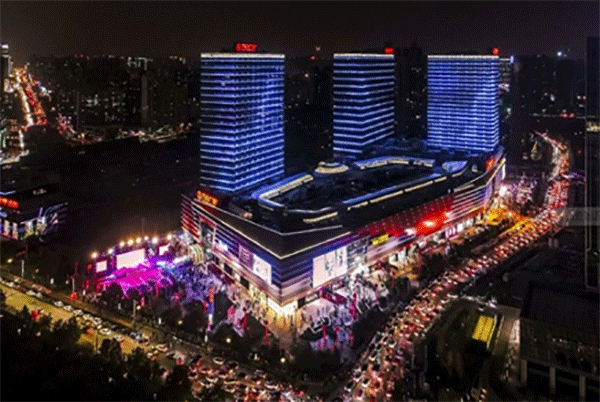
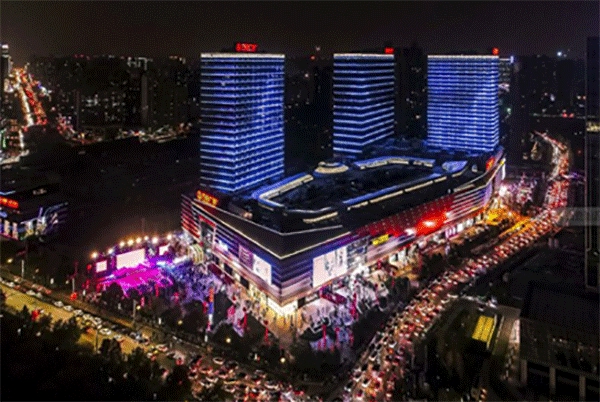
Pixel lights have become the default choice for building facade lighting because they resolve a problem that conventional fixtures cannot: they give designers a surface rather than a lamp.
On a media or feature facade, the requirement is rarely just to make the building bright. It is to make the building programmable — to change with a brand campaign, a season or an event, and to read cleanly on camera. Pixel lights achieve this because each unit is individually addressable, so the whole installation can be treated as a low-resolution screen when needed and as an even architectural wash when it is not.
The second reason is optical. A large facade needs a huge number of small, evenly matched light points, and pixel lights are manufactured specifically for that: consistent binning, tight colour tolerance, uniform beam distribution and a form factor that can follow cornices, curves and structural reveals where a conventional projector could never be mounted cleanly.
The third reason is durability. Facade installations are exposed to the worst of the weather and are often impossible to reach without scaffolding or a lift. IP68 double-encapsulated pixel lights, sealed connectors and lifetimes above 50,000 hours make them a practical choice for surfaces that are meant to stay untouched for years.
Send us your facade drawings or reference photos — we'll reply with a fixture layout proposal and quotation within 24 hours.